Monday, June 11, 2012

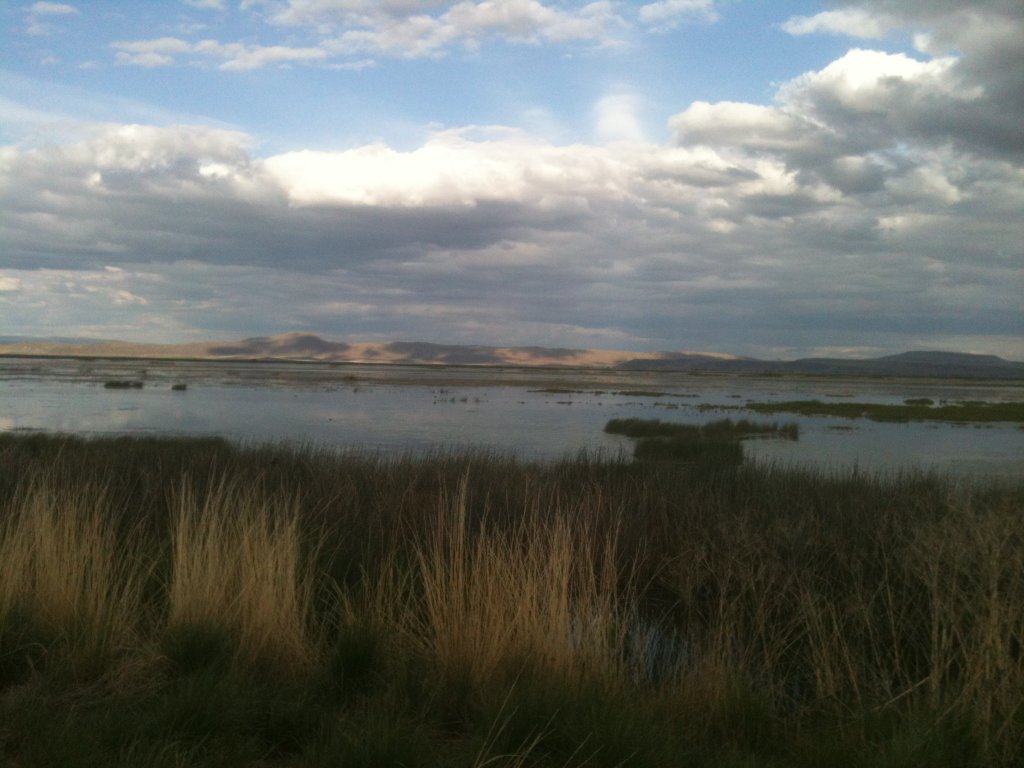
Lower Klamath in California.

We went for a birding drive to an area we had gone to last month. One month later there were noticeably fewer birds due to northern migration.
           First a couple of photos are of a butterfly that Donna took.
      This is a Pale Tiger Swallowtail feeding on our hummingbird feeder.


The hummingbird is not sure what to make of this intruder.


The lower Klamath Wildlife Refuge in California is a great place to see the largely migratory bird population. It is starting to thin out by June but we did see this Black-necked Stilt, a shore bird, that just barely comes into our area.


  Thought we'd spotted a different American Avocet than we saw here last month until our birding book by Sibley notified us that this is the breeding phase.


This is a large family of geese, I wouldn't want to pay for the kids college education! They are either Canadian Geese or Cackling Geese, both are very closely related and difficult to identify.


The yellow-headed Blackbird is pretty common out here but hard to get close enough to photograph.


There were many Great Egrets in the area.


Got to say this is a favorite of mine...so cute. The Ruddy Duck in his breeding colors, is so unusual to me and I like it! He is  classified as a blue billed, stiff tail duck.


A couple of non birds showed up today. Here is the native Western Pond Turtle.


Donna spotted this Back Tailed Deer standing in the marsh.


Friday, June 8, 2012

Odds an ends at the hatchery


The Williamson River near Chiloquin Oregon would be a great place to try a fly rod.


What the heck is that garbage bag at the end of the raceway?


Why it's my "redneck" bird blind! Today was just the first time of trying it out, I hope by Sunday I might be able to fool the eagle or osprey since they both seem to have my number.


As you can see from Donna expression, she feels this is much better than humping over a 21 game, sucking cigar smoke into her lungs!


This is good exerciser too, humping those brochures out to the kiosk. She does such a good job in keeping all the pamphlets full and up to date.


Noticed this nest and called Donna over to see it. We were both blown away, it was so beautiful and delicate looking. I had to ask the head "fish farmer" Greg, and he told me it was a paper wasp nest. He also explained that they are not particularly aggressive unless you mess with the nest...well who could blame them?


First grade school tour.

       Donna and I work with a great group of guys who call themselves "fish farmers". They work hard, play hard, hunt and fish but there is one thing that seems to strike that "doe in the headlights" look...it's seeing 60 1st graders rolling into the hatchery.


Ha ha...I'm just kidding, as you can see they are teddy bears around the kids.
Here Regen explains how the eggs are developed in the incubators.


The kids are all eyes looking at the young fry swimming around the small indoor raceways.


Donna is also listening to Regen, so someday she can give the tour.


The highlight for the kids is always feeding the "big trout" in the show pond. These are the same two pounders that Edgar the Eagle fishes for nearly every night.


The "Pied Piper" of the hatchery happily leading his flock back to the buses to say good-by.


Monday, June 4, 2012

A rainy day in Oregon...are you kidding me?

Who'da thunk it? Woke up to a slight drizzle, not enough to prevent us from doing our outside duties, but this afternoon rain, hail and lightning sent us indoors.


We got to see the hatchery crew move some fingerling's from small trays to large indoor raceways.


These fingerling's being moved are Lahontan Cuttthroat trout and at 4000 of them per pound they are raised in these aluminum screen trays, from egg to fingerling in 2 1/2 months.


It's amazing to imagine these small fry are the descendants of a huge fishery that once spanned Lake Tahoe, Pyramid and Walker lakes at one time. Some of the fish in the late 1900's to the middle of the 20th century were referred as Lake Salmon because of their size...up to 60 pounds


The Cuttthroat trout are released into the larger cement tubs where they will stay until October. The green and blue boxes hanging over the water are auto-feeders for the fish.


The trays that held the 500,000 fry get a well deserved wash and dry for the next group in the fall.


Donna decides to spent the wet afternoon getting some rod racks ready for a big kids free fishing day at the hatchery this coming Saturday.


Well hell! I'm not going outside either today so I'll just redo or check the rigging on all the fishing poles for the kids.


Saturday, June 2, 2012

Some local sights

When we got to the Klamath Valley at the end of April there may of been one or two thousand cattle grazing on the 5 by 15 mile long valley. Within the next month 10's of thousands of cattle have been transported here from Northern California for the lush grasses.


Just across the Oregon state line this windmill was still pumping water for livestock.


The Bear Valley National Wildlife area near Dorris, California has some of the most beautiful grasslands I have ever seen.


This is Larry and Donna talking about birding. We had stopped for lunch on a large empty area with only a pole barn nearby. Larry, the owner of all the land, came over to make sure we weren't troublemakers. Larry gave us a history of the area and explained some of the farming techniques employed by him on his 1280 acres. Our stop proved very lucky because Larry knew about some great birding areas we could visit, some of which was on his land.


Larry told me to go by the "pivot" because there might be some wildlife in the green grass. "Ya, ok...what's a pivot"? I only knew it by circle irrigation but the correct terminology is pivot. What do I know, I'm just a city slicker!


Part of the beautiful 1/2 mile dirt road that leads to our fish hatchery.


While I was waiting to see if I could get a photo of the osprey fishing on one of the raceways I decided that the light and late shadows might make a good photo without him...he never showed this night.


Crater lake in late May 2012


Lower Klamath Wildlife area was an unexpected bonus for Donna and I.


About 4 miles from the hatchery are the headwaters of the Wood River.


Friday, June 1, 2012

Our feathered friends...

Some of our birding was done here at the hatchery and quite a bit right across the state line in California.

The inland white pelicans are cool and so different from their brothers, the Brown Pelicans. While it is great to sit on the coast and watch the brown pelicans diving for fish from up to 50 feet, the white pelican never dives into the water but rather float around and swims underwater looking for food.
Here is the White Pelican

The Brown Pelican in California.


Turkey Vulture enjoying a seal breakfast.


It's fun to watch the Western Sandpiper scurry in and out of the wave line.


An Evening Grosbeak giving us the "stink eye"!


This American Robin is looking for a meal.


Aah... success.


Edgar the Bold Eagle dragging a two pound trout until airborne.


Edgar and a couple of his buddies eyeing the Osprey's pond.


Although the Osprey is half the size of the Bold Eagle, it will dive bomb the eagle unmercifully until it leaves its hunting grounds.


This photo I took is on some Oregon birding websites only because our resident biologist told me to take the picture. Apparently the Indigo Bunting is very rare this far west and caused a big stir on an Oregon birders blog and thus increased birders coming to the hatchery. Only spotted once more a couple days later the little bugger then disappeared.


We have many Tree Swallows as this one below, plus Barn and Cliff Swallows on the property.


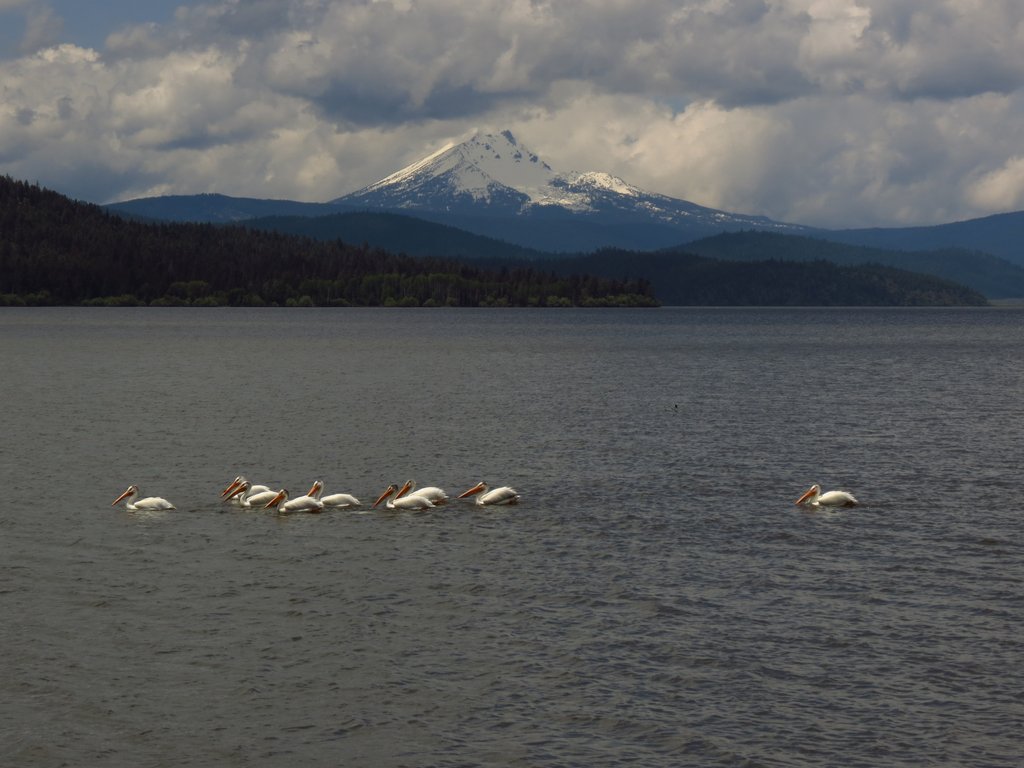
           A group of White Pelicans on Klamath Lake passing in front of Mount Mcloughlin


We saw this Barn Owl, courtesy of Larry the farmer, about 5 miles from Dorris, California. We stopped for lunch on Larry's property and he wondered over to make sure we weren't "rabble-rousers".


Donna and I both believe this is a Swainson's hawk, on the two sections of Larry's farm.


Here is a regular of the area...a Bullock's Oriole


This female Blackbird was very unhappy that I was taking pictures of her nest.


And finally for this blog is the American Avocet


.....